ERP plays a critical role in how distributors, manufacturers, and route-based businesses operate in the field. Your mobile app connects ERP data directly to drivers, sales reps, and frontline teams, where execution actually happens.
As mobile usage continues to grow, one decision has become increasingly important:
Should your mobile app rely solely on web access, or should it be built as a native app?
This choice goes far beyond user preference. It directly affects reliability, productivity, data accuracy, and customer experience.
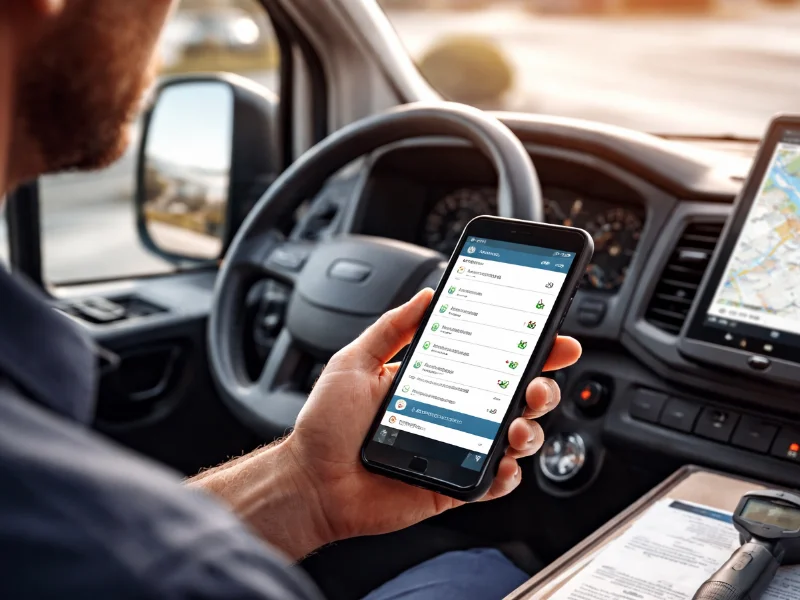
The Reality of Mobility in The Field
Mobile app solutions are often evaluated in office environments with strong connectivity to the ERP and minimal distractions. The field looks very different.
Drivers and route sales teams regularly work:
- In areas with poor or inconsistent cellular coverage
- Inside warehouses, basements, and loading docks
- On tight schedules where delays compound quickly
When a mobile app depends heavily on browser-based web access or continuous connectivity, those real-world conditions expose weaknesses fast.
This is where the difference between web-based ERP apps and native apps become critical.
What is The Difference Between Web Apps and Native Apps
At a high level:
- Web apps run inside a browser and typically require an active internet connection.
- Native apps are installed directly on the device and built specifically for the operating system.
For basic access or non-critical tasks, web apps may be sufficient. But for mission-critical mobile workflows—such as route sales, proof of delivery, invoicing, and customer interactions—native apps provide clear advantages.
Key Benefits of Native Mobile Apps
1. Reliable Performance Without Constant Connectivity
Native apps are designed to function even when connectivity drops. Data is stored locally on the device and synced automatically once a connection is restored.
This ensures:
- Transactions are never lost
- Routes continue without interruption
- Drivers can complete their work confidently
For delivery operations, offline capability isn’t a feature, it’s a requirement.
2. Faster, More Consistent User Experience
Native apps run directly on the device, eliminating the performance limitations of browser-based applications.
This results in:
- Faster load times
- Smoother navigation
- Fewer crashes and reloads
In high-volume route environments, these performance gains translate directly into improved productivity.
3. Better Access to Device Capabilities
Native mobile apps integrate seamlessly with device hardware and operating system features, including:
- Camera access for proof of delivery and barcode scanning
- GPS for accurate routing and location validation
- Secure local data storage
- OS-level security controls
These capabilities are often limited or less reliable when accessed through a web browser.
4. Higher Adoption and Fewer Errors
When mobile tools are intuitive and responsive, adoption improves naturally.
Native apps reduce:
- Training time for new drivers
- Input errors caused by lag or reloads
- Friction that leads to workarounds and manual fixes
The result is cleaner data flowing back into ERP and less follow-up work for back-office teams.
The Costs of Having the Wrong App
When the mobile app struggles in the field, the impact is immediate:
- Incomplete deliveries
- Delayed invoicing
- Customer frustration
- Increased manual reconciliation
These issues don’t originate in the ERP—they originate at the mobile layer.
Choosing the right mobile architecture protects both operational efficiency and customer relationships.
Why Native Mobile App Matters More Now
Customer expectations continue to rise, and operations are under constant pressure to do more with less. At the same time, reliance on mobile execution has never been greater.
Decision-makers are now asking:
- Can our mobile app perform when connectivity fails?
- Can driver’s complete transactions without delay?
- Can we trust the data flowing back into our ERP system?
- Native apps are built to answer “yes” to all three.
XMC’s Approach to Native Apps
XMC delivers a true native mobile experience designed specifically for route-based and delivery-driven operations.
Rather than adapting browser-based tools, XMC focuses on:
- Offline-first functionality
- Reliable transaction capture
- Seamless ERP integration
- Performance that holds up in real-world conditions
The goal is not just mobility—but confidence in execution.
Bottom Line
When integrating with your ERP, the choice between web apps and native apps has real operational consequences. Native apps offer the reliability, performance, and usability required for route sales, delivery distribution, and proof-of-delivery workflows. As organizations plan for the year ahead, this decision plays a critical role in long-term efficiency and customer satisfaction.