For a long time, proof of delivery was exactly what its name suggests—a way to confirm that an order made it to its destination. The customer signed the paperwork, the driver headed to the next stop, and the signed receipt eventually found its way back to the office. Once that happened, most businesses considered the job done.
Today, that signature means much more.
Distribution companies are moving faster than ever, customer expectations continue to rise, and businesses are expected to answer questions almost immediately. Whether a customer wants to know where an order was left, who accepted the delivery, or whether a damaged product was documented at the time of delivery, companies are expected to have accurate information at their fingertips. That's why proof of delivery has evolved from a simple receipt into one of the most valuable records an organization can capture.
For route selling and distribution businesses, proof of delivery isn't just about confirming a shipment arrived. It's about protecting your drivers, your customers, your revenue, and your reputation. When the right information is available at the right time, small questions stay small instead of turning into larger operational problems.
Every Delivery Tells a Story
Most deliveries are routine. Products arrive, paperwork is completed, and everyone moves on with their day. In fact, that's exactly how you want it to work.
The reality is that when people talk about proof of delivery, they're usually thinking about the small percentage of deliveries that don't go according to plan. Maybe a customer believes an item was missing. Perhaps the delivery was accepted by someone other than the person who placed the order. Sometimes products are left at a side entrance or receiving dock, and by the time they're discovered, no one is quite sure what happened.
These situations aren't necessarily common, but they're common enough that every distributor has dealt with them.
When they do happen, the conversation changes quickly. Instead of asking whether the delivery was completed, everyone is trying to answer a different question: What actually happened?
That's where proof of delivery becomes much more than a signature on a screen or a piece of paper. It becomes the record your team relies on to confidently answer questions, resolve concerns, and move forward.
Good Documentation Saves More Than Time
It's easy to think of proof of delivery as something that's primarily for customers, but the benefits extend throughout the entire organization.
For customer service teams, having immediate access to delivery information makes it easier to answer questions without putting customers on hold or tracking down drivers hours later. Accounting departments benefit because completed deliveries can be verified quickly, helping invoices move through the process with fewer delays. Operations managers gain better visibility into what's happening in the field, while drivers have documentation that accurately reflects the work they've completed.
Perhaps most importantly, reliable proof of delivery helps eliminate guesswork.
Without clear documentation, resolving a customer concern often becomes an investigation. Employees start making phone calls, searching through paperwork, and trying to remember details from deliveries that may have happened days earlier. Even when everyone is doing their best, relying on memory is rarely the most reliable approach.
Good documentation changes that conversation. Instead of asking people what they think happened, you have information that shows what actually happened.
Why Paper Isn't Enough Anymore
Paper proof of delivery has been part of the distribution industry for decades, and for many businesses, it still feels familiar. The challenge isn't that paper doesn't work. The challenge is that it no longer works as efficiently as today's operations demand.
Think about what happens after a paper delivery receipt is signed. It must make its way back to the office, be organized, filed, or scanned, and eventually connected to the rest of the transaction. Until that happens, much of the information captured in the field isn't easily available to the people who need it.
If a customer calls that same afternoon asking for a copy of the signed delivery receipt, someone may need to contact the driver or wait until paperwork returns to the office. If questions arise about damaged products or where an order was placed, handwritten notes may not tell the entire story.
None of these situations are unusual. They're simply the reality of relying on paper processes in an environment where customers expect answers in real time.
As distribution businesses continue to grow, those manual processes become increasingly difficult to manage. More deliveries create more paperwork, more opportunities for delays, and more time spent searching for information that should already be available.
Electronic Proof of Delivery Gives You the Full Picture
This is where electronic proof of delivery, often called ePOD, begins to change the conversation.
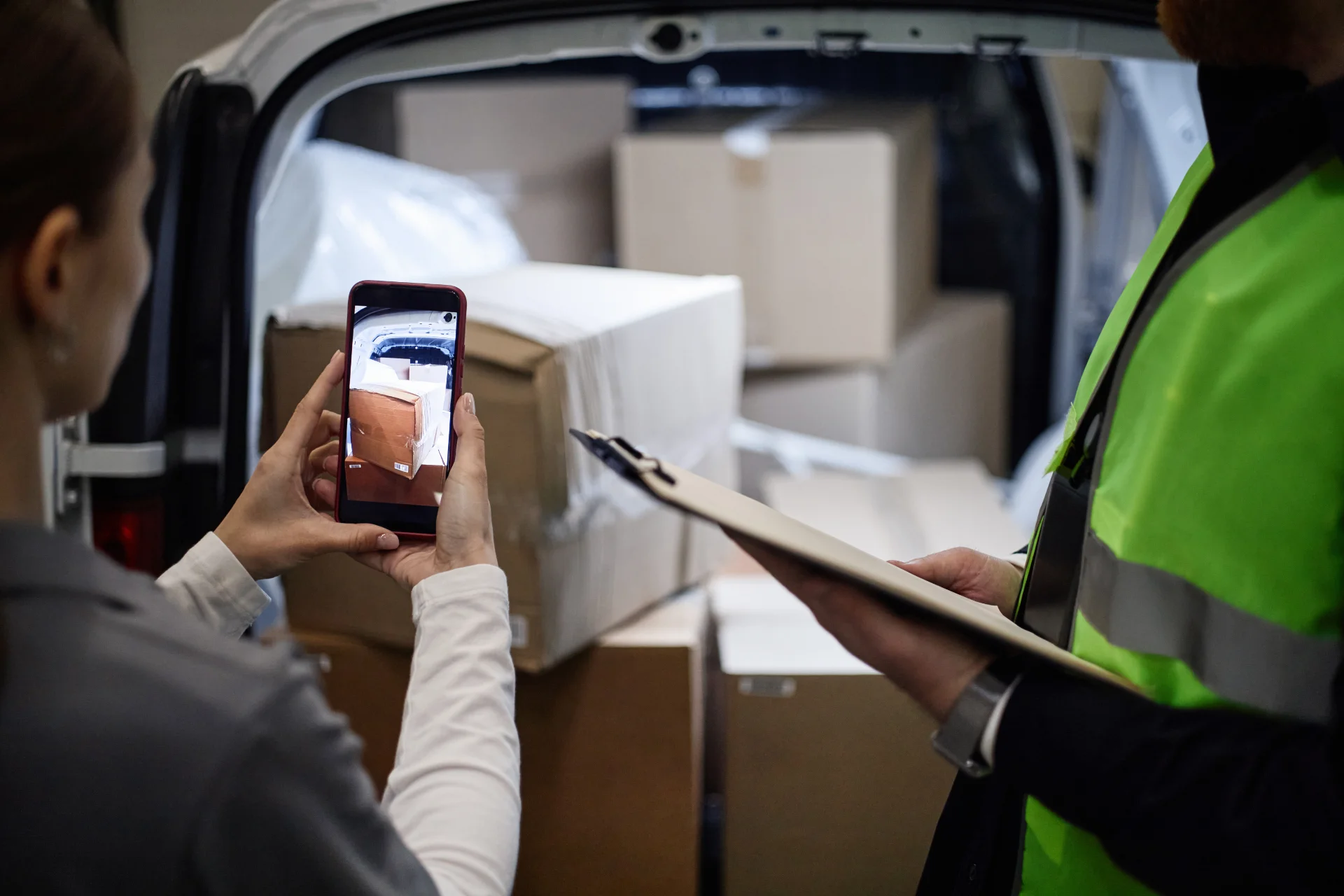
Rather than capturing only a signature, electronic proof of delivery allows businesses to document much more about what happened at the point of service. A timestamp confirms when the delivery was completed. Photos can document where products were placed, the condition they arrived in, or any issues that need to be noted before the driver leaves. Delivery notes provide additional context, and everything is stored digitally as part of the transaction.
Taken together, those details create a much more complete picture of every delivery.
Instead of relying on a single signature to answer every question, businesses have documentation that helps tell the entire story. That makes it easier to respond to customer inquiries, resolve disputes quickly, and provide employees with the information they need without spending valuable time searching through paperwork. More importantly, the information is available when it's needed—not hours or days later after paperwork has been processed.
The Real Value Comes from Connecting Everything Together
Capturing electronic proof of delivery is an important first step, but it's even more valuable when that information flows directly into your ERP system. After all, proof of delivery isn't an isolated event. It's part of a much larger business process that includes sales orders, inventory, invoicing, payments, customer service, and reporting.
When proof of delivery exists in a separate application or remains trapped in paper files, employees often have to jump between systems or manually enter information to complete the picture. That takes time, increases the risk of errors, and makes it harder for everyone to work from the same information.
When delivery documentation is connected to your ERP, those pieces come together naturally. Customer service can quickly answer questions, accounting has the information needed to process invoices, and managers have greater visibility into what's happening across the business. Instead of chasing paperwork, your team can focus on serving customers.
Better Documentation Builds Better Customer Relationships
One of the biggest benefits of electronic proof of delivery is something that's often overlooked: trust.
Customers don't usually think about proof of delivery until they have a question. When they do, they want answers quickly. Being able to provide a signed receipt, delivery photos, timestamps, or notes within minutes demonstrates professionalism and gives customers confidence that your business has accurate records.
It also changes the tone of the conversation. Rather than debating what may have happened, everyone is working from the same information. That helps resolve issues faster, reduces frustration, and reinforces confidence in your organization.
Over time, those experiences contribute to stronger customer relationships. Reliable documentation doesn't just protect your business—it helps create a better customer experience.
How XMC Helps Protect Every Delivery
At XMC, we believe proof of delivery should do more than capture a signature. It should give your team the information they need to confidently complete deliveries, answer customer questions, and keep your business moving.
That's why XMC's native mobile platform allows drivers and route sales representatives to capture electronic signatures, unlimited photos, timestamps, delivery notes, and other supporting documentation as part of their normal workflow. Whether documenting where an order was placed, recording damaged products, or capturing additional details before leaving a customer site, everything is stored digitally and becomes part of the delivery record.
Because XMC integrates directly with Sage and Acumatica ERP systems through secure bi-directional APIs, that information is quickly available throughout the organization. Customer service, accounting, operations, and management all have access to the same accurate information without waiting for paperwork to be returned to the office or manually updating records.
The result is a more complete proof of delivery process that helps reduce manual work, improve visibility, and protect every delivery from start to finish.
Bottom Line
Proof of delivery has always been about confirming that an order arrived where it was supposed to. Today, it's become much more than that.
With customer expectations continuing to grow and businesses relying on timely, accurate information, proof of delivery has become an essential tool for protecting revenue, reducing disputes, improving visibility, and delivering a better customer experience. Electronic proof of delivery gives organizations the documentation they need to respond with confidence, while helping every department work from the same reliable information.
For route selling and distribution companies, proof of delivery is no longer just proof.